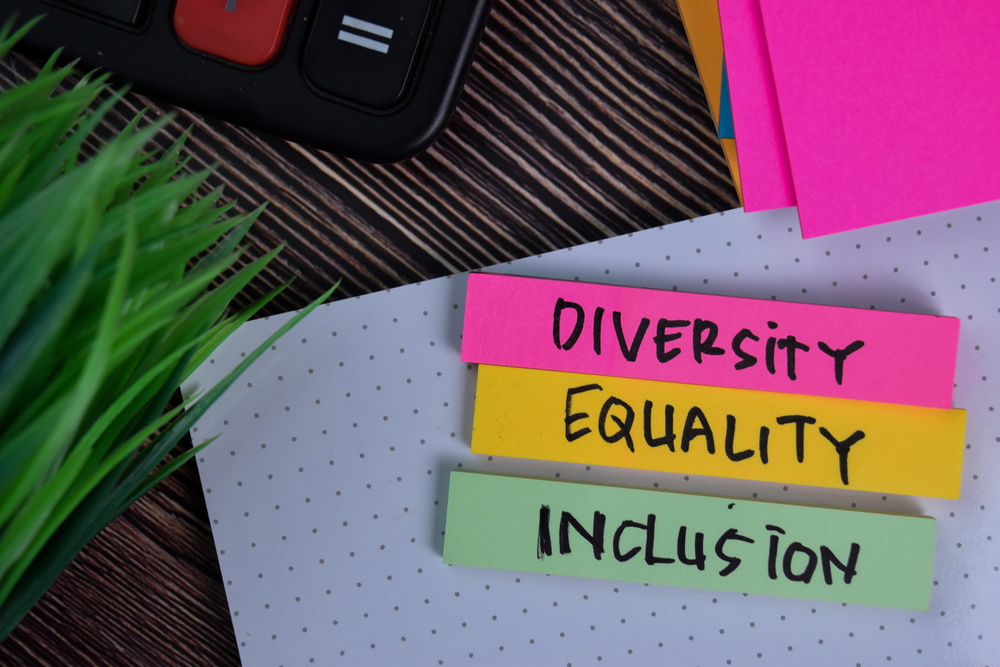
I've been in the field of diversity and inclusion (D&I) for almost 15 years now — not as long as many, but long enough to have observed some of the significant…
I've been in the field of diversity and inclusion (D&I) for almost 15 years now — not as long as many, but long enough to have observed some of the significant trends and changes that have happened over time. The latest trend I've noticed (which I welcome wholeheartedly) might sound a little odd at first:
So what do I mean?
Of course, we spoke about the business case back then, but the data wasn't so strong at the time - it was to some extent, a principle of faith that could be adopted by business leaders based on the fact that they intrinsically believed in fairness but needed the business language to justify some of the effort and investment.
Suddenly, there was research available in every corner: McKinsey & Co published their first Women Matter paper in 2007; Scott Page published his pivotal book "The Difference" in 2008; the late Katherine Phillips published some of her most pivotal papers on diversity and decision making in 2009. The evidence piled up and became impossible to ignore.
All of a sudden, we went from doing sessions that were largely about equity into a deep dive into this evidence, spending 1-2 hours with leaders and executives to put across a single point with undeniable certainty: diversity and inclusion is good for business.
From an innovation, revenue generation, cost-saving and productivity perspective: it's good for business. From a customer insight, talent attraction and retention, risk and compliance perspective: it's good for business. With data to prove it.
And this messaging worked. The 10 years since has seen dramatic growth in executive buy-in for D&I, and our company with it. It's not because people no longer cared that it was in the interests of social justice and that it was the right thing to do, but it was much easier to pursue these noble goals under the guise of doing what is right for the company and for the shareholders. We could do well by doing good.
This was, and still is, something I believe in deeply myself, but this didn't always carry water in the corporate space; it was the business case that drew the energy and investment needed from executives to make real changes that would, as a result, create fairness and inclusion.
The drawback was that we didn't talk about equity nearly as much. By equity I mean taking steps to ensure fair outcomes for people who have faced systemic biases and historical disadvantage, so that they substantively have equal opportunity to achieve the same outcomes as people who are born with certain privileges.
This is different to equality which is the basis of most anti-discrimination legislation, which suggests that simply by not preventing anyone from accessing any opportunity, programme or job application, we are providing substantive fairness. But all the real-world evidence shows this is not the case – we all need to do much more to understand the lived experience of others and why those of us who experience certain privileges have an obligation to level the playing field for those who do not.
There were times in this last decade when I did question whether we and our clients had strayed too far off the path, that our language about D&I had become too sanitised, even if it was getting some of the desired results.
This time, however, it's been driven by purely humanistic reasons. The #BlackLivesMatter movement is the foremost symbol of this, a global movement that recognises that it's not enough to be 'not racist', we must also become anti-racist. The last few years have seen society become increasingly "woke" to the need for equity and as such the expectation being placed on businesses to respond appropriately is much, much stronger.
And it's not just race - this energy has infused all aspects of intersectional diversity, from gender identity to cultural background. Executive leaders are once again standing up en masse to say: We will do this regardless of the business case because it is simply the right thing to do.
In 2021, I have heard CFOs stand up and say: "The numbers don't matter"; the Global Diversity, Inclusion and Belonging Benchmarks, which we contribute to, were renamed to add "Equity" into the title; and multiple clients have remarked how significantly the conversation has changed.
The business case is still there. Let's be honest, many people still need it and major investment is still required - but Diversity, Equity and Inclusion (DEI) is very much more human today than it has been for a while.





Receive Symmetra's latest thinking, research and practical resources on inclusion, leadership, culture, talent and future-ready work.
We'll only use your details to send Symmetra insights. Unsubscribe any time. See our privacy notice.
Let's discuss how the thinking explored here applies to your leadership, culture and talent priorities.