


For many organisations, AI is still being treated primarily as a technology project. The conversation is dominated by questions of tools, platforms, automation, productivity and technical skills. Which systems should we adopt? Which workflows can we streamline? Where can we reduce effort? How quickly can we capture efficiency gains?
These are all legitimate questions, but they are increasingly not the most important ones.
The deeper shift now emerging is that AI is changing not only what work gets done, but how people think, decide, collaborate, challenge and trust one another at work.
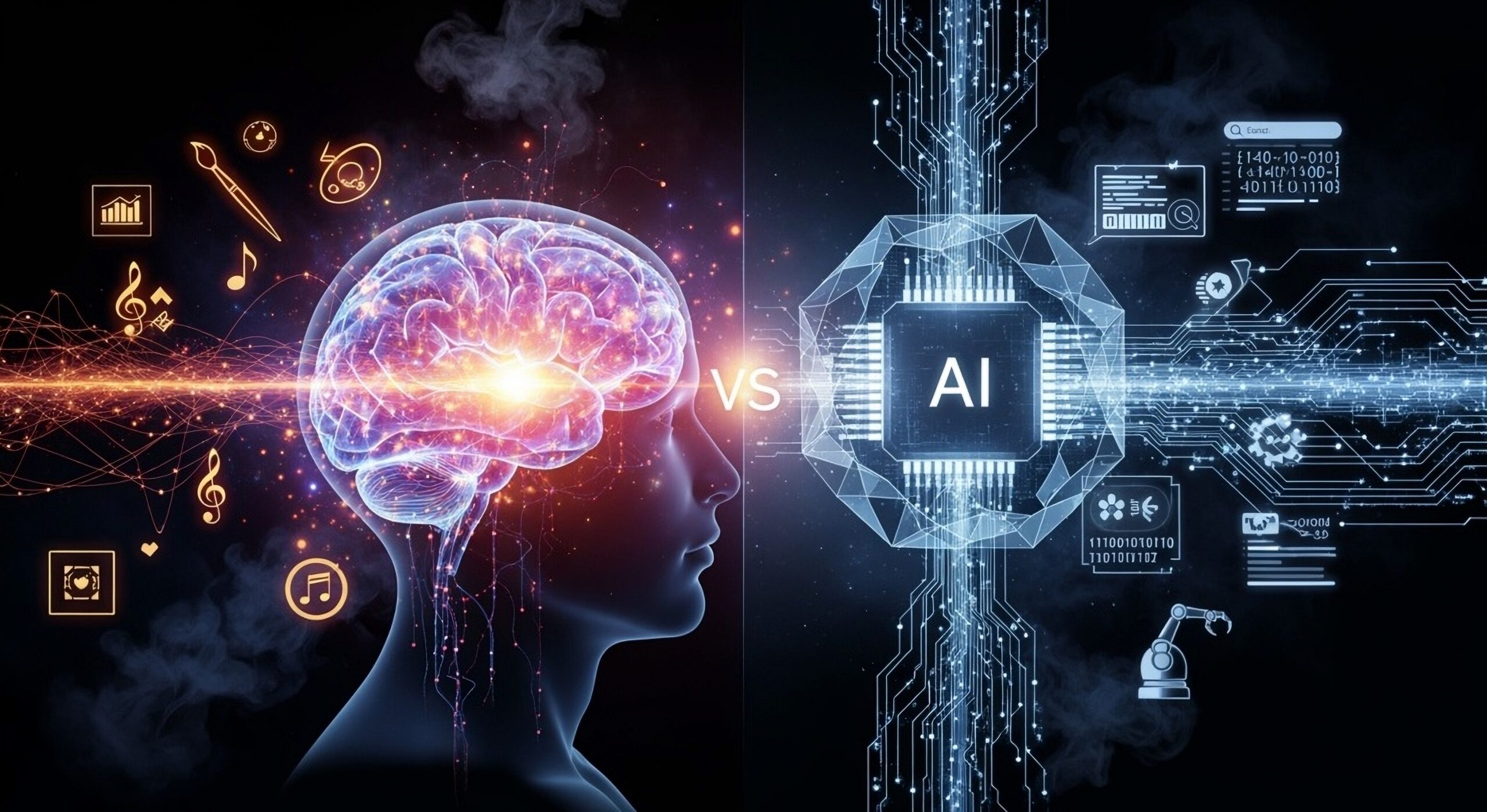
AI is entering the human system of the organisation. It is changing the relationships between people, the way teams make decisions, the way leaders communicate, and the way employees understand their own value and contribution. That is why the future of work is not just about automation or augmentation – it is about inclusive human-AI teaming.
This distinction matters. Automation suggests that human effort is being removed from the system. Augmentation recognises that AI becomes an essential tool and working partner for people, but doesn’t recognise the larger system of the team and organisation that AI is entering.
Human-AI teaming goes beyond these two primary visions of human-AI interaction in the workplace. It recognises something more complex and, ultimately, more useful: AI will increasingly become part of how work is done, but human judgement, accountability, creativity, contextual awareness and trust will determine whether that work is any good.
The organisations that understand this will not only ask, “How do we get people to use AI?” They will ask, “What leadership conditions and behavioural norms are required for people and AI to produce better outcomes together?” That is a more demanding question, and it leads to a very different leadership agenda.
AI Is Entering the Human System
One of the most significant risks emerging in AI-enabled work is not that people will refuse to use AI. It is that they will use it too passively. AI can produce outputs that are fluent, polished and plausible, which is exactly what makes it powerful. It is also what makes it dangerous.
When an AI-generated recommendation looks coherent, people may be less likely to interrogate it. When a draft appears persuasive, they may spend less time testing its assumptions. When an analysis seems complete, they may not ask what data, context or perspective is missing.
This is the risk sometimes described as cognitive surrender: the gradual outsourcing not only of effort, but of the type of thinking through which judgement is developed. For leaders, this should be a serious concern. Effort is not merely a cost to be removed from work. In many forms of knowledge work, effort is where expertise is built. It is where people learn to distinguish between a good answer and a superficially convincing one. It is where they develop the ability to spot weak reasoning, test assumptions and biases and navigate ambiguity.
AI can accelerate good judgement, but it can also amplify poor judgement. The difference is not the tool itself. The difference is the leadership system and accountability around it.
When AI Makes Teams Quieter
AI is also changing the dynamics inside teams. In theory, AI should help teams move faster and make better use of information. In practice, many organisations are discovering something more complicated. Teams can become less confident, more hesitant and less willing to challenge output generated by AI..
This is not irrational. When AI output is embedded in a presentation, recommendation or decision, questioning it can feel socially risky. It may feel like questioning the person who endorsed it. It may feel like admitting that you do not fully understand the technology. It may feel like slowing the team down at precisely the moment everyone is being encouraged to move faster, making you look like some kind of Luddite.
So people stay quiet.
That silence is costly. It allows errors to travel further. It weakens learning, creates rework and erodes trust in both the technology and the team. Over time, it can produce the opposite of what AI adoption was supposed to achieve: more hesitation, more checking, more ambiguity and less confidence in the quality of decisions.
This is where leadership becomes decisive. Can people challenge an AI output without losing status? Can they say, “I think this is wrong,” before a decision hardens? Can teams distinguish between AI-generated input and human-owned accountability? Will leaders reward the person who catches a flaw early, rather than the person who moves fastest with an untested answer?
These are not abstract cultural questions. They are performance questions.
Productivity Without Trust Will Not Last
There is also a tempting but flawed assumption sitting beneath many AI strategies: that if the productivity case is strong enough, people will come along. But trust is not secondary. People are not simply “resistant to change” – often, they are responding rationally to uncertainty.
If employees do not understand how AI is being used, they fill the silence. If they cannot see how decisions are being made, they protect themselves. If they are expected to adopt new tools without the time, support or clarity required to use them well, experimentation becomes another burden. If AI makes work faster but also much more cognitively intensive, or more ambiguous, burnout rises and trust declines.
The result is not always open resistance. Sometimes it is quiet compliance. That is obviously not real transformation – it is adoption theatre that carries significant long-term costs. Ultimately any short-term gains from AI will be consumed by a lack of any thoughtful innovation and improvement over time happening in teams, increased friction and reduced engagement.
Inclusive Leadership Is AI-Critical Leadership
This is why inclusive leadership is not a side issue in the AI era. It is one of the core disciplines that determines whether AI creates sustainable value.
Inclusive leadership has often been framed through the lens of representation, belonging and equity. Those remain important. But in AI-enabled work, its performance relevance becomes even more explicit. Inclusive leaders create the conditions for better thinking. They make it easier for people to challenge assumptions, surface risk, contribute different perspectives and learn in public. They reduce the social cost of saying, “I am not sure.” They ensure that dissent is not treated as resistance, and that speed does not become an excuse for weak decision-making.
At Symmetra, we have created the FIVE lens – Fairness, Inclusion, Voice and Enablement – to clarify the conditions for sustained high performance.
Fairness asks whether people are being held accountable for AI-enabled decisions they do not fully understand, control or have permission to question.
Inclusion asks whether different perspectives are being used to test how AI is shaping work, risk and decision-making.
Voice asks whether people can meaningfully challenge AI outputs, workflow changes or emerging risks, and whether that challenge can influence what happens next.
Enablement asks whether people have the time, capability, guardrails and support to use AI well, rather than simply being pressured to move faster.
These questions are simple, but they expose a great deal. They reveal whether AI adoption is being treated as a human system change or merely a tool rollout. They also reveal whether an organisation is building the leadership capability required to capture value from AI without weakening the human conditions that make high performance possible.
The Leadership Question Now
AI will undoubtedly reshape work. It will automate tasks, redesign workflows, accelerate analysis and change the capabilities organisations need. But the more AI enters the workplace and becomes an integral feature of the way teams function, the more human leadership matters. Not less.
The leaders who succeed in this next phase will not be those who simply encourage experimentation or mandate adoption. They will be those who build the conditions for disciplined, inclusive and accountable human-AI teaming.
That means protecting human judgement while using AI to extend it. It means designing work so that people can challenge, verify and improve AI-enabled outputs. It means recognising that trust, voice, fairness and enablement are not cultural luxuries. They are the operating conditions for AI to create value without degrading capability, confidence or connection.
The future of work will not be defined by AI alone. It will be defined by the quality of the teams and behavioural norms we build around it.
The question for organisations is therefore not just whether they are investing enough in AI. It is whether they are investing enough in the leadership capabilities required to make AI meaningful, productive and humanly sustainable.
Because if AI is going to transform work, leaders need to ensure it also helps people continue doing what they do best.