


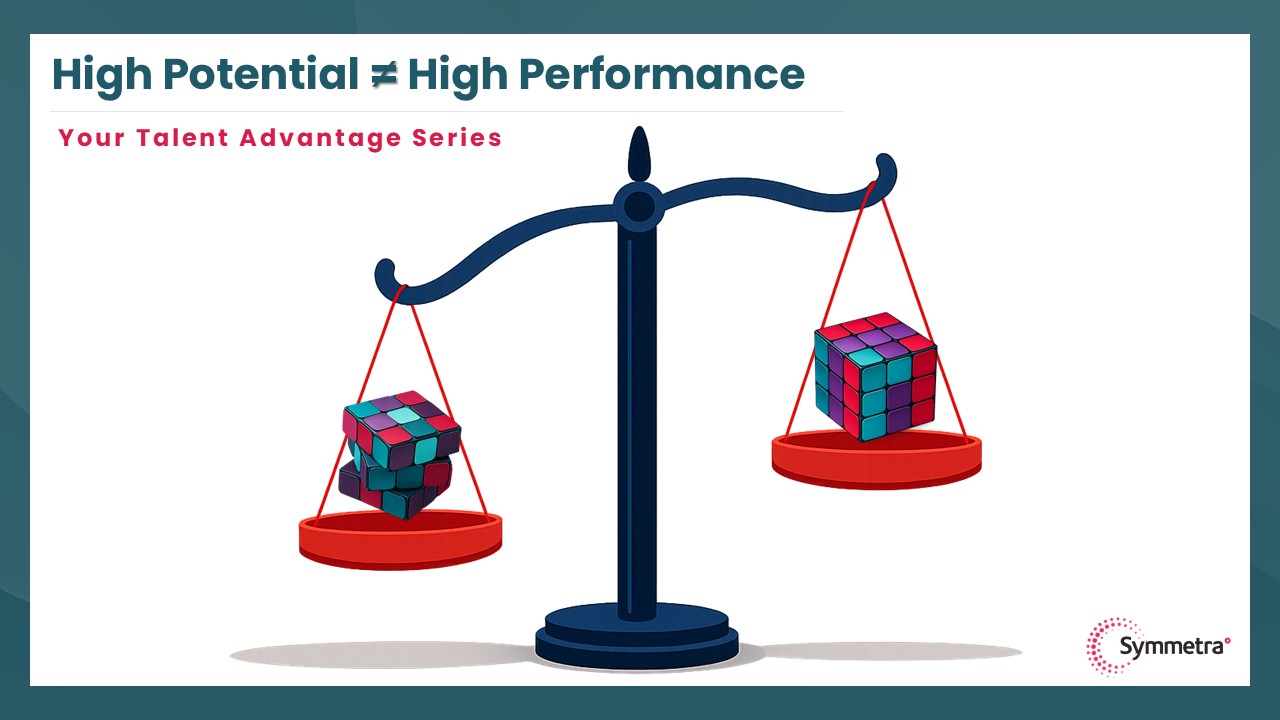
Many organisations have matured their talent systems over the past decade. Performance frameworks are embedded, calibration routines are familiar, and leadership competency models are widely used to anchor expectations. Yet one topic continues to generate discomfort in executive conversations: the idea of “high-potential” talent.
For some leaders, the term carries the implication of exclusivity, a select group with privileged access to opportunities. For others, it raises concerns about fairness, transparency, or the risk of overlooking strong performers who are not immediately visible. This discomfort is understandable. Labels can feel limiting, and the notion of a confidential high-potential cohort sits uneasily with leaders who value equity and broad access to development.
But avoiding the distinction between high performance and high potential does not create fairness. It creates ambiguity, and ambiguity is the enemy of good talent decisions.
Why the Distinction Matters
High performance reflects what an individual delivers today. It is grounded in evidence, outcomes, and meeting the expectations of the current role.
High potential reflects what an individual could deliver tomorrow, in roles that are more complex, ambiguous, or enterprise-wide. It is forward-looking, anchored in learning agility, aspiration, capacity for scale, and the ability to operate beyond functional boundaries.
These concepts are related, but they are not interchangeable. Many high performers excel because they have mastered the demands of their current context. That does not automatically translate into the capability, or appetite, to lead at a broader level. Equally, individuals with strong potential may not yet be the highest performers, particularly if they are early in role, under-utilised, or operating in environments that do not fully enable them to leverage their strengths.
Why Leaders Struggle With the Idea of “High Potential”
The discomfort often stems from a belief that identifying high potential creates an elite tier. But the real issue is not exclusivity; it is clarity. Without a shared understanding of what potential looks like, leaders default to visible performance as a proxy. This is where bias creeps in, pipelines narrow, and organisations unintentionally reinforce sameness.
The question is not whether high potential exists. It is whether organisations have the discipline to identify it with rigour, fairness, and transparency.
This rigour matters because potential is fundamentally different from performance. Performance can be evidenced through results and outcomes, whereas potential is an assessment of future capability and therefore carries an inherent degree of uncertainty. Research suggests that while potential assessments can provide valuable information for promotion decisions, they may also be more vulnerable to subjective bias if not supported by clear criteria, robust assessment methods, and effective governance.
A Critical Nuance: Potential Builds on Performance
High-potential individuals should, and typically do, deliver strong performance in their current roles. Potential is not a substitute for performance; it is an additional dimension that signals capacity for broader leadership in the future. The challenge is distinguishing those who can scale beyond their current remit and investing in them deliberately.
Why Distinct Approaches Are Essential
High performance and high potential require different evidence, different conversations, and different assessment methods. When organisations blend the two, they risk promoting individuals who excel in delivery but may struggle in roles requiring strategic judgement, enterprise thinking, or people leadership. They also risk overlooking individuals who have the capability to grow rapidly but have not yet had the opportunity to demonstrate it.
A robust approach to high-performance assessment is backward-looking and evidence-based. High-potential identification is forward-looking and capability-based. It requires leaders to assess indicators such as learning agility, aspiration for broader responsibility, capacity for complexity, and the ability to influence beyond their immediate remit.
What Best Practice Looks Like
Organisations that excel in identifying and developing future leaders typically demonstrate:
- Clear definitions of performance and potential
- Distinct assessment tools for each
- A unified leadership or cultural competency model
- Leader capability to assess aspiration, agility, and capacity for scale
- Governance and calibration processes that ensure fairness and rigour
- Development pathways that differentiate between strengthening performance and accelerating potential
This approach recognises that high performance is essential, it drives in-year commercial delivery and the achievement of medium-term business objectives. But it also acknowledges that high potential brings something different: the ability to innovate, anticipate shifts, and create the transformational momentum that sustains growth over the long term.
It is this future-oriented capability, not just today’s results, that determines whether a leader can guide the organisation through the next wave of technological and strategic change.
Why This Matters Even More in an AI-Enabled Future
As organisations accelerate their adoption of AI and advanced technologies, the distinction between performance and potential becomes even more critical. The leaders who thrive in the next decade will not simply be those who deliver strongly today, but those who can adapt, learn, integrate technology intelligently, and inspire their teams to embrace the opportunities it unlocks.
Current high performers may excel in today’s operating environment, yet may not possess the curiosity, agility, or strategic foresight required to lead in a technology-intensive future. Identifying high potential is therefore not about exclusivity, it is about ensuring the organisation has leaders who can navigate complexity, unlock the value of AI, and steward teams through continuous transformation.
The Leadership Question That Matters Most
The most effective leaders do not simply ask who is performing well today. They understand that performance is a measure of contribution, while potential is a measure of trajectory. They also recognise that the organisation’s long-term capability, especially in a technology-accelerated world, depends on their ability to distinguish between the two with clarity and confidence.
High performance is invaluable. High potential is strategic. Organisations that treat them as distinct but aligned build stronger, more resilient pipelines — not by accident, but by design.